What Materials Can a Waterjet Cut?
Apr 27, 2026
Waterjet cutting has become one of the most versatile and precise manufacturing technologies across industries such as stone processing, metal fabrication, automotive, aerospace, and architectural decoration. But one of the most common questions buyers ask is:
“What materials can a waterjet actually cut?”
This article gives you a clear, experience-based answer—backed by real applications, comparisons, and frequently asked questions—to help you evaluate whether a waterjet system fits your business.
1. How Waterjet Cutting Works (Quick Overview)
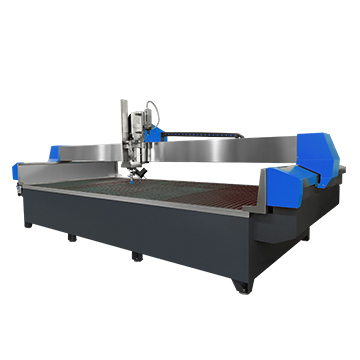
A Industrial Waterjet Cutting Machine uses ultra-high-pressure water (typically 3000–6000 bar), sometimes mixed with abrasive particles like garnet, to cut through materials.
Pure waterjet → soft materials (rubber, foam, textiles)
Abrasive waterjet → hard materials (stone, metal, glass)
Unlike thermal cutting methods (laser or plasma), waterjet cutting is a cold cutting process, meaning:
No heat-affected zone (HAZ)
No material deformation
No microcracks in brittle materials
2. Materials a Waterjet Can Cut (With Real Applications)
2.1 Stone Materials (Core Industry Application)
Multifunctional Waterjet Machines are widely used in stone fabrication factories.
Cuttable materials:
Granite
Marble
Quartz
Artificial stone
Ceramic tiles
Real application scenario:
In countertop manufacturing, a waterjet can cut complex sink openings and curved edges in quartz slabs (20–30mm thick) with clean edges, eliminating secondary polishing.
Why waterjet is preferred:
No edge chipping (common with blade cutting)
Ideal for intricate inlays and mosaics
High precision (±0.1mm achievable)
2.2 Metals (From Thin Sheets to Thick Plates)
Cuttable materials:
Stainless steel
Carbon steel
Aluminum
Copper
Titanium
Real application scenario:
A fabrication workshop can cut 50mm thick stainless steel plates for industrial flanges without thermal distortion—something laser cutting struggles with at this thickness.
Key advantage:
Maintains original material properties (no heat damage)
Suitable for aerospace and precision engineering parts
2.3 Glass (Without Cracking)
Cuttable materials:
Float glass
Laminated glass
Bulletproof glass
Real application scenario:
Architectural companies use waterjet cutting to create custom glass panels with complex patterns for facades and interior partitions.
Why it works:
No thermal stress → prevents cracking
Smooth cutting edges
2.4 Ceramics and Porcelain
Cuttable materials:
Porcelain slabs
Ceramic tiles
Technical ceramics
Real application scenario:
High-end interior projects often require precise cutting of large-format porcelain slabs (1200×2400mm) for seamless wall installations.
2.5 Composites and Advanced Materials
Cuttable materials:
Carbon fiber
Fiberglass
Kevlar
Real application scenario:
In automotive and aerospace industries, waterjet cutting is used for carbon fiber panels without delamination, which is a major issue with mechanical cutting.
2.6 Soft Materials (Using Pure Waterjet)
Cuttable materials:
Rubber
Foam
Leather
Textiles
Food products
Real application scenario:
Manufacturers use pure waterjet to cut rubber gaskets with high repeat accuracy and no burning edges.
3. Materials That Are Challenging (But Still Possible)
While waterjet is extremely versatile, some materials require careful handling:
Tempered glass → cannot be cut (will shatter)
Very thick materials (>200mm) → slower cutting speed
Highly reflective metals → actually easier than laser, but still need parameter optimization
4. Waterjet vs Other Cutting Methods (Buyer Comparison)
4.1 Waterjet vs Laser Cutting
Feature
Waterjet
Laser
Heat impact
None
High
Material range
Very wide
Limited (mainly metals)
Thickness capability
Excellent
Limited
Precision
High
Very high (thin materials)
Conclusion:
Choose waterjet for versatility and thick materials
Choose laser for ultra-fast thin metal cutting
4.2 Waterjet vs CNC Saw Cutting (Stone Industry)
Feature
Waterjet
Bridge Saw
Shape capability
Complex curves
Straight cuts
Edge quality
Smooth
May chip
Material stress
None
Possible cracks
Conclusion:
Waterjet is ideal for custom, high-value stone products, while saws are better for mass straight cutting.
5. Frequently Asked Questions
Q1: Can a waterjet cut anything?
Almost—but not literally everything. It can cut most materials except tempered glass and some extremely fragile composites.
Q2: How thick can a waterjet cut?
Steel: up to 150–200mm (depending on power)
Stone: typically 50–100mm efficiently
Q3: Will water damage the material?
No. The cutting process is controlled and localized. For example: In stone processing, even after continuous 48-hour operation, slabs remain structurally stable with no water penetration issues.
Q4: Is waterjet cutting expensive?
Initial investment is higher, but:
Reduces rework
Eliminates secondary finishing
Cuts multiple materials on one machine
ROI is strong for multi-material factories.
Q5: Why do high-end stone factories prefer waterjet?
Because it enables:
Custom designs (medallions, inlays)
High precision for export markets
Premium product pricing
6. How to Choose the Right Waterjet Machine
When selecting a waterjet system, buyers should focus on:
1. Application Scenario
Stone fabrication → prioritize stability and table size
Metal cutting → focus on pressure and pump system
2. Cutting Accuracy
Look for machines that maintain ±0.1mm precision during long working cycles.
3. Pump Quality
The pump is the core:
Intensifier pump (common)
Direct drive pump (energy-saving option)
4. After-Sales Support
Critical for overseas buyers:
Remote diagnostics
Spare parts availability
Technical training
7. Final Thoughts
CNC Controlled Waterjet Cutting stands out because of one key advantage: It can cut almost any material without changing tools or processes.
From granite countertops to aerospace titanium parts, from glass art to rubber seals—waterjet technology delivers precision, flexibility, and reliability across industries.
For buyers in the stone machinery sector, investing in a waterjet system is not just about cutting—it's about expanding product capability and entering higher-value markets.
Read More









 IPv6 network supported