How to Optimize Your Stone Production Workflow
Jun 02, 2026
A Practical Guide to Increasing Efficiency, Reducing Costs, and Improving Stone Processing Quality
In today's highly competitive stone industry, profitability depends on more than just having skilled workers and quality materials. The efficiency of your production workflow directly impacts delivery times, labor costs, product consistency, and customer satisfaction.
Whether you operate a stone fabrication shop, monument factory, countertop workshop, architectural stone processing facility, or large-scale stone manufacturing plant, optimizing your production workflow can significantly improve productivity while reducing operational expenses.
This guide explores practical strategies, equipment upgrades, and workflow improvements that can help stone manufacturers maximize output and stay competitive in the global market.
Why Workflow Optimization Matters in Stone Processing
Many stone factories focus on purchasing new machines but overlook the inefficiencies hidden within their production processes.
Common workflow problems include:
Excessive manual handling of stone slabs
Repeated measurements and layout errors
Machine downtime due to poor scheduling
Bottlenecks between cutting, carving, and polishing stages
High labor dependency
Material waste caused by inaccurate cutting
For example, a factory processing granite memorials may spend more time moving stone between workstations than actually machining it. In some cases, production delays are caused not by machine speed but by poor workflow planning.
Optimizing workflow helps manufacturers:
✓ Increase daily production capacity
✓ Reduce labor costs
✓ Minimize material waste
✓ Improve product consistency
✓ Shorten delivery times
✓ Increase profit margins
Step 1: Analyze Your Existing Production Process
Before investing in new equipment, evaluate your current workflow.
Map every production stage:
Material Receiving——Stone Storage——Slab Loading——Cutting——Carving——Edge Profiling——Polishing——Quality Inspection——Packaging——Shipping
Track:
Processing time at each stage
Waiting time between operations
Machine utilization rates
Labor requirements
Material waste percentages
Many factories discover that bottlenecks occur at only one or two stages, making targeted improvements far more cost-effective than a complete equipment replacement.
Step 2: Automate Repetitive Operations
Manual operations often create the largest productivity losses.
Example: Manual Layout vs CNC Processing
Process
Manual Method
CNC Method
Measuring
Operator-dependent
CAD/CAM controlled
Cutting Accuracy
Varies by worker
Consistent and precise
Production Speed
Slower
Faster
Material Waste
Higher
Lower
Repeatability
Limited
Excellent
Labor Requirement
More operators needed
Fewer operators required
Complex Designs
Difficult and time-consuming
Easily automated
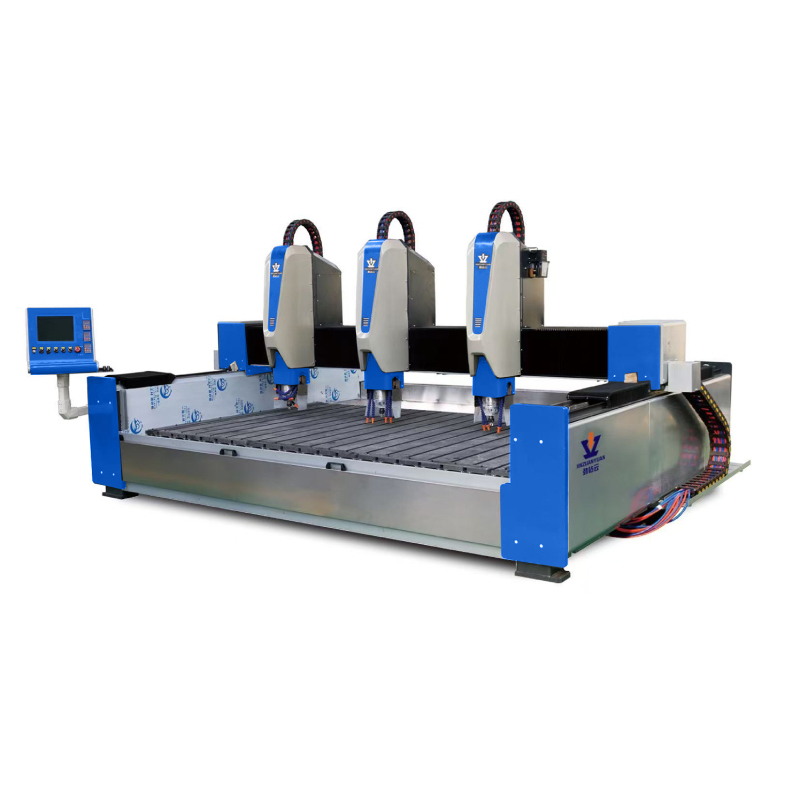
A CNC stone engraving machine can automatically process complex relief carvings, decorative borders, lettering, and 3D sculptures with minimal operator intervention.
For example, a Heavy-Duty Stone CNC Router can continuously process granite and marble patterns for multiple hours while maintaining consistent dimensional accuracy, reducing the need for rework.
Step 3: Reduce Material Handling Time
Moving stone is often one of the most time-consuming activities in a workshop.
Heavy slabs may be transferred multiple times before completion.
To improve efficiency:
Position machines according to production sequence.
Use vacuum lifters and slab handling systems.
Create dedicated loading and unloading zones.
Minimize unnecessary transportation routes.
Optimized Workflow Example
Traditional Layout:
Storage → Cutting → Storage → Carving → Storage → Polishing
Optimized Layout:
Storage → Cutting → Carving → Polishing → Packaging
Reducing unnecessary movement can save dozens of labor hours each week.
Step 4: Invest in Multi-Function Stone Machinery
One of the most effective ways to streamline production is to use equipment capable of performing multiple operations.
Traditional Setup
Bridge Saw
Profiling Machine
Engraving Machine
Drilling Machine
Integrated CNC Solution
A modern stone CNC machining center can perform:
Cutting, Milling, Engraving, Drilling, Profiling, Relief carving
By reducing machine transfers, manufacturers improve workflow continuity and reduce labor requirements.
For custom countertop fabrication, monument production, and architectural stone projects, integrated processing often delivers significantly higher efficiency.
Step 5: Optimize Tool Management
Tool wear directly affects machining quality and production efficiency.
Signs of poor tool management include:
Chipped edges
Rough surface finishes
Slower cutting speeds
Increased machine vibration
Practical Example
A worn diamond tool may increase cutting time by 20–30% while producing lower-quality results.
Best practices include:
Scheduled tool inspections
Tool life tracking
Proper storage conditions
Using application-specific diamond tools
For example:
Granite carving requires different tooling than marble carving.
Thick monument stones require different cutting parameters than thin decorative panels.
Step 6: Implement Digital Production Planning
Many factories still rely on paper schedules and verbal instructions.
Digital production management provides:
Real-time job tracking
Machine scheduling
Production reporting
Inventory monitoring
Delivery planning
Benefits include:
Reduced communication errors
Better machine utilization
Improved delivery reliability
When multiple CNC machines operate simultaneously, digital planning can significantly reduce idle time and production conflicts.
Step 7: Reduce Rework Through Quality Control
Rework is one of the most expensive hidden costs in stone manufacturing.
Common causes include:
Incorrect dimensions
Design mistakes
Surface defects
Poor polishing consistency
Implement inspections at key stages:
Before Cutting
Verify:
Stone dimensions
Material quality
CAD drawings
Before Polishing
Verify:
Surface quality
Profile accuracy
Engraving depth
Before Packaging
Verify:
Final dimensions
Finish quality
Customer specifications
Early detection prevents costly reprocessing later.
Step 8: Use Specialized Machines for High-Volume Production
Different applications require different equipment.
Countertop Production
Recommended Equipment:
Bridge Saw
CNC Machining Center
Edge Polishing Machine
Monument Production
Recommended Equipment:
Stone Engraving Machine
Laser Engraving Machine
Tombstone Polishing Machine
Architectural Decoration
Recommended Equipment:
Waterjet Cutting Machine
CNC Stone Carving Machine
Profiling Machine
Choosing the right machine for each production task improves throughput and reduces bottlenecks.
Frequently Asked Questions (FAQ)
Q1: What is the fastest way to improve stone production efficiency?
The quickest improvement often comes from identifying bottlenecks and automating repetitive operations such as cutting, engraving, or profiling.
Q2: Does a CNC stone machine really reduce labor costs?
Yes. One skilled operator can often supervise multiple automated processes, reducing dependence on large production teams while improving consistency.
Q3: How can I reduce stone material waste?
Accurate CAD/CAM programming, optimized nesting layouts, and precision CNC cutting help maximize material utilization.
Q4: Which stone processing stage usually causes delays?
In many factories, polishing and manual finishing create the largest bottlenecks due to labor-intensive operations.
Q5: Is workflow optimization more important than buying new machines?
Often, yes. Improving production layout and process management can generate significant efficiency gains before major equipment investments are required.
Final Thoughts
Optimizing your stone production workflow is not simply about working faster—it's about creating a smarter, more efficient manufacturing system.
By analyzing bottlenecks, reducing material handling, automating repetitive tasks, implementing digital planning, and investing in the right stone processing equipment, manufacturers can increase output, improve quality, and strengthen their competitive position in the global market.
As demand for customized stone products continues to grow, factories that combine advanced stone machinery with efficient production management will be best positioned for long-term success.
Read More










 IPv6 network supported