
What Are You Looking For?


In today’s stone processing industry, rising labor costs and increasing competition are forcing factories to rethink how they produce stone borders, countertop edges, tombstone profiles, stair noses, and decorative moldings. Traditional manual profiling methods are no longer enough for companies that want consistent quality, faster delivery, and scalable production.
Whether you are producing granite countertop edges, marble decorative lines, cemetery stones, or customized architectural profiles, an automatic profiling machine can significantly reduce labor dependence while improving productivity and product consistency.
This article explains in detail how automatic profiling machines help stone factories lower operating costs, improve efficiency, and increase profitability.
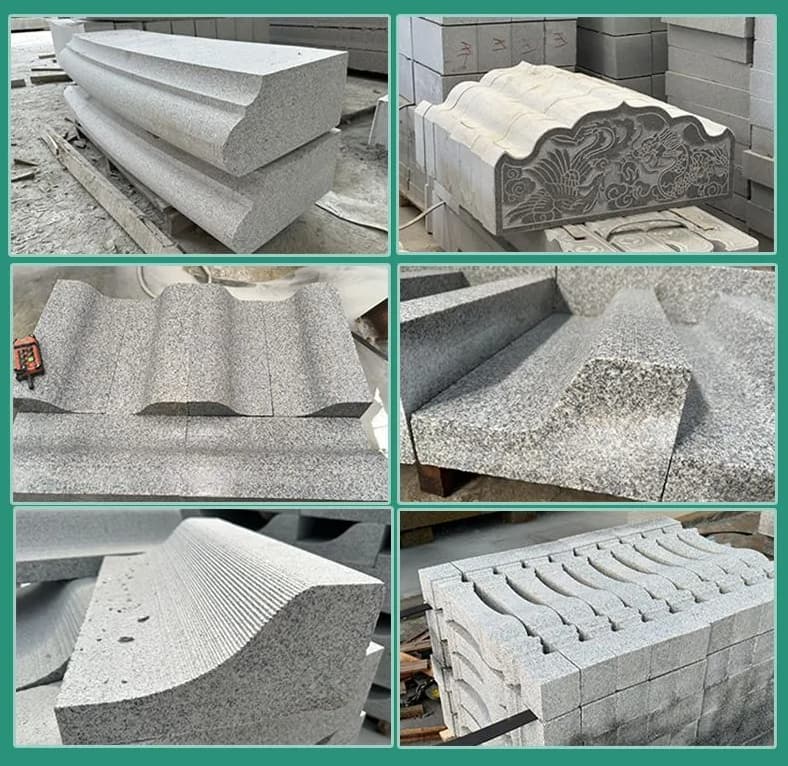
An Automatic CNC Profiling Machine is a stone processing machine designed to automatically shape, grind, and polish stone edges or surfaces according to preset templates or programmed paths.
These machines are widely used for:
Compared with manual edge grinding, automatic profiling machines use CNC control systems, precision guide rails, and stable spindle motors to perform continuous and repeatable processing with minimal operator intervention.
Many stone factories still rely heavily on manual labor for profiling work. However, several industry challenges are making this increasingly expensive:
Experienced stone polishing and profiling workers require years of training. In many countries, younger workers are unwilling to enter dusty and physically demanding stone workshops.
Factories often face:
Traditional profiling usually involves:
A skilled worker may complete only a limited number of profiles per day, especially for complex shapes.
Inconsistent hand polishing can lead to:
For expensive marble or quartz slabs, even a small mistake can result in significant losses.
One of the biggest advantages of automation is labor reduction.
With a traditional manual setup: One worker often handles one processing station.
With an automatic profiling machine: One trained operator can supervise 2–4 machines simultaneously.
This directly reduces:
For example, a medium-sized countertop factory processing 200 linear meters per day may reduce its profiling workforce from 6 workers to 2 workers after upgrading to automatic equipment.
Manual profiling work usually stops because of:
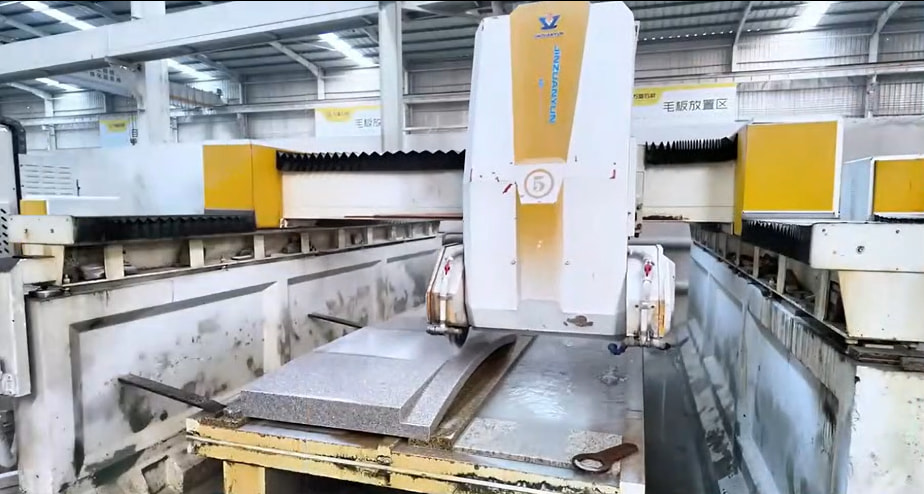
Automatic profiling machines can run continuously for long periods with stable performance.
In real production environments, High-quality Profiling Machines can maintain stable profiling precision even during continuous multi-shift operation.
This helps factories:
Compared with manual grinding, processing speed can increase significantly.
Example Comparison
| Processing Method | Average Daily Output | Workers Required |
|---|---|---|
| Manual Profiling | 80–120 meters | 4–6 workers |
| Automatic Profiling Machine | 250–400 meters | 1–2 workers |
For factories handling large export orders, this productivity improvement can dramatically reduce per-unit labor costs.
Rework is one of the most overlooked labor costs in stone processing.
Manual profiling often creates:
Automatic profiling machines use template tracking or CNC programming to maintain consistent shapes across every stone piece.
This reduces:
For export-oriented factories, consistency is especially important because overseas buyers usually require batch uniformity.
Training an experienced manual stone profiling worker may take several months or even years.
By contrast, modern automatic profiling machines are designed with:
New operators can often learn basic machine operation within a much shorter time.
This helps factories:
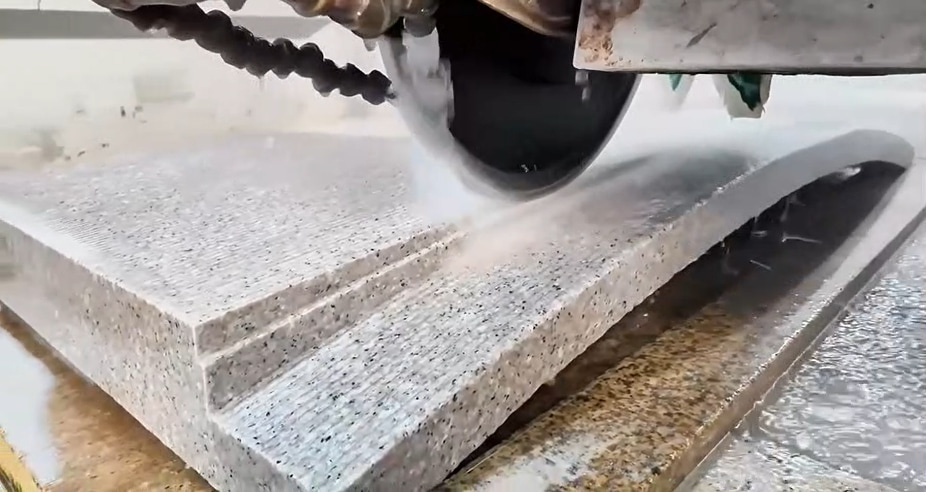
Advanced profiling machines can automatically compensate for tool wear.
This feature helps maintain:
Without automatic compensation, manual operators must frequently stop production to manually adjust tools.
This not only wastes labor time but also increases the risk of processing errors.
Traditional stone profiling relies heavily on experienced craftsmen.
However, factories that depend too much on individual workers face operational risks:
Automation converts manual experience into standardized machine processing.
This creates:
Automatic Profiling Machine vs Manual Processing
| Factor | Manual Processing | Automatic Profiling Machine |
|---|---|---|
| Labor Requirement | High | Low |
| Production Speed | Slow | Fast |
| Product Consistency | Depends on worker skill | Highly consistent |
| Material Waste | Higher | Lower |
| Training Difficulty | High | Moderate |
| Long-Term Operating Cost | Increasing | More controllable |
| Suitable for Mass Production | Limited | Excellent |
Automatic profiling machines are widely used for:
Factories producing kitchen countertops for North American markets often require large-volume consistent edge processing.
Automation helps them:
Cemetery stone production requires:
Automatic profiling equipment improves repeatability while reducing dependence on experienced craftsmen.
This is especially valuable during peak production seasons.
Large hotel, villa, and commercial building projects often involve:
Automatic profiling machines help factories efficiently process large quantities of identical decorative components.
Q1: Can automatic profiling machines process both marble and granite?
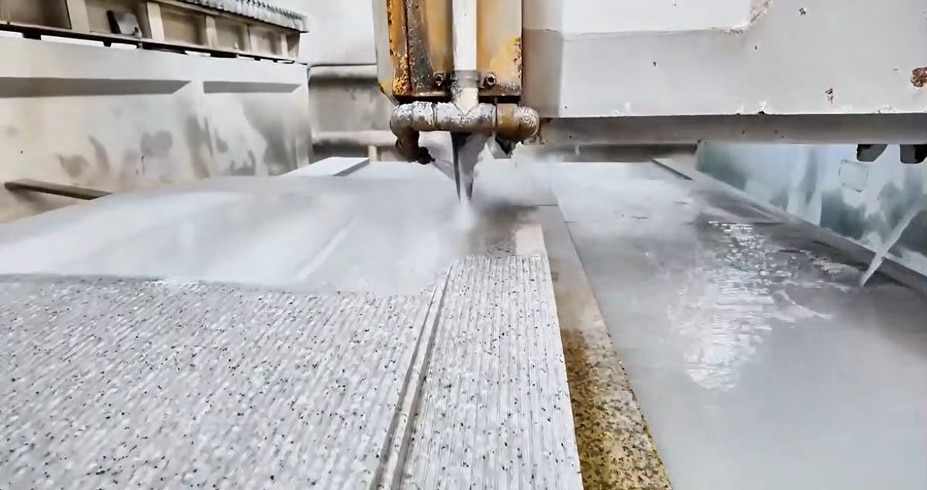
Yes. Most modern profiling machines can process: Marble, Granite, Quartz, Artificial stone, Limestone. Different tools and processing parameters are used depending on material hardness.
Q2: Is CNC programming difficult for profiling machines?
Not necessarily. Many machines now use:
Basic operation can usually be learned quickly.
Q3: How much labor can a factory realistically save?
This depends on production scale and product type.
However, many factories reduce profiling-related labor costs by 40%–70% after introducing automatic equipment.
Q4: What maintenance is required?
Routine maintenance usually includes:
Proper maintenance helps ensure long-term stable operation.
When selecting a profiling machine, buyers should evaluate:
Processing Requirements
Machine Structure
A heavy-duty machine frame provides:
Automation Level
Look for features such as:
Supplier Experience
Choose suppliers with:
As labor costs continue rising worldwide, stone processing factories must improve efficiency to remain competitive.
An Multi-Function Stone Profiling Machine is no longer just a production upgrade — it is a long-term cost control solution.
By reducing manual dependence, improving processing consistency, increasing production speed, and minimizing material waste, automatic profiling machines help factories achieve:
For stone manufacturers aiming to expand production while controlling operational expenses, investing in automatic profiling technology is becoming an increasingly practical and profitable choice.
leave a message
Scan to Wechat :

Scan to WhatsApp :






 IPv6 network supported