What are the main advantages of water jet cutting over traditional bridge saws?
Jan 21, 2026
Traditional bridge saw Machine have long been the standard equipment in stone processing. They are efficient for straight cutting of granite, marble, and quartz slabs. However, with the growing demand for customized architecture, artistic stone, and complex designs, more factories are now adopting water jet cutting machines to expand their production capabilities.
This article compares water jet cutting Machine and traditional bridge saws from a practical, factory-use perspective.
1. Cold Cutting: No Heat, No Micro-Cracks
Bridge saws cut stone with high-speed diamond blades, generating temperatures that may exceed 200°C, often causing edge chipping and hidden micro-cracks, especially on thin sintered stone.
Water jet cutting uses ultra-high-pressure water mixed with abrasive (up to 380–420 MPa). The process is completely cold, producing:
No thermal damage
No structural stress
Cleaner edges
Higher finished-product yield
Typical application: sink openings and thin porcelain slabs where breakage risk must be minimized.
2. Complex Shapes and Internal Cutting
Bridge saws are mainly suitable for straight or simple angle cuts. Complex curves and inner holes usually require secondary CNC processing.
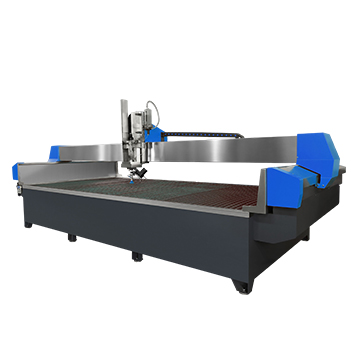
Water jet machines can directly cut:
Curves and arcs
Internal holes (without pre-drilling)
Sharp corners
Logos, medallions, and mosaics
Cutting accuracy can reach ±0.05 mm.
Typical application: hotel floor medallions, curved stair steps, artistic wall panels.
3. One Machine for Multiple Materials
Bridge saws are mainly limited to stone.
Water jet cutting can process:
Marble, granite, quartz
Porcelain and sintered stone
Glass and laminated glass
Stainless steel and aluminum composites
Typical application: aluminum honeycomb stone panels and glass-stone composite panels.
4. Better Edge Quality, Less Rework
After bridge saw cutting, slabs often require heavy grinding and corner repair.
Water jet cutting produces:
Narrow kerf (0.8–1.2 mm)
Minimal chipping
More uniform vertical edges
In many countertop projects, only light polishing is needed.
5. Objective Comparison
Aspect
Water Jet Cutting
Traditional Bridge Saw
Cutting principle
Cold erosion (no heat)
High-speed mechanical blade
Shape capability
Any shape, internal holes, curves
Mainly straight or simple geometry
Edge quality
Smooth, minimal chipping
Often needs secondary grinding
Material range
Stone, metal, glass, composites
Mainly stone
Precision
±0.05 mm achievable
±0.2–0.5 mm typical
Custom projects
Highly suitable
Limited
Initial investment
Higher
Lower
Production positioning
High-end, customized, complex
Standard slab processing
Bridge saws remain ideal for high-speed straight cuts. Water jets are superior for high-value, complex, and multi-material projects.
6. Frequently Asked Buyer Questions
Q1: Can a water jet replace a bridge saw completely?
No. In most factories, water jets complement bridge saws. Bridge saws handle fast straight cutting, while water jets handle:
Sink openings
Curves
artistic patterns
thick or fragile materials
The most competitive workshops usually operate both systems.
Q2: Is water jet cutting slower than bridge saw cutting?
For straight lines, yes.
For complex shapes, water jets are often faster overall, because they eliminate:
secondary CNC milling
manual drilling
extensive edge correction
Total project lead time is often shorter.
Q3: What type of stone factory benefits most from water jets?
Countertop factories
Architectural stone suppliers
Custom stone workshops
Mosaic and medallion producers
Export-oriented factories handling diversified orders
Q4: Does water jet cutting weaken stone strength?
No. On the contrary, because there is no heat-affected zone, water jet cutting preserves natural material strength better than blade cutting.
Q5: What thickness range can a water jet handle?
Thin porcelain: 3–6 mm
Standard stone slabs: 15–30 mm
Thick stone: 80–150 mm (depending on pump pressure and nozzle system)
7. Buyer Insight from Export Projects
From actual foreign trade experience, buyers who invest in water jet systems are usually upgrading toward:
Higher-end architectural projects
OEM services for designers
Custom kitchen and bathroom solutions
Diversified material processing
Their biggest gains are not only cutting capability, but order competitiveness. Many report that after adding water jet cutting, their quotation success rate for complex projects increases significantly.
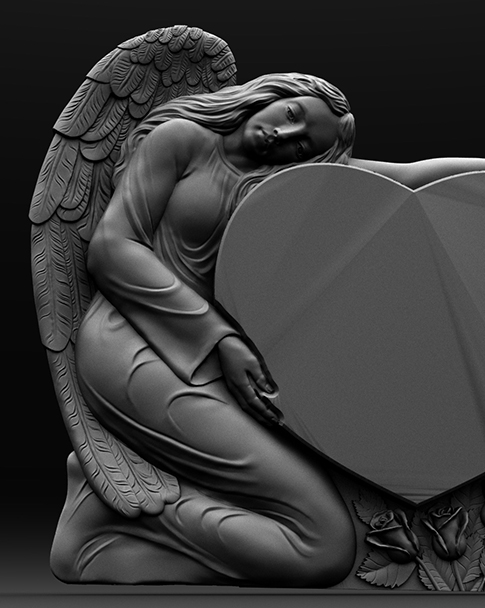
8. Waterjet cutting effect demonstration
9. Conclusion: Why More Stone Factories Are Choosing Water Jet Technology
While traditional bridge saws remain essential for high-speed straight cutting, water jet machines provide clear, measurable advantages in:
Material safety
Shape freedom
Multi-industry capability
Edge quality
Custom project profitability
For modern stone factories aiming to move from price competition to technical and solution-based competition, water jet cutting is no longer an optional upgrade — it is becoming a strategic investment.
Read More









 IPv6 network supported