Enter product details (such as color, size, materials etc.) and other specific requirements to receive an accurate quote.

leave a message

If you are interested in our products and want to know more details,please leave a message here,we will reply you as soon as we can.
submit
other

Heavy Duty Stone Router Machine

Home

Heavy Duty Stone Router Machine

  • Is a Stone CNC Carving Machine Dangerous? The Real Safety Guide Every Operator Should Read
    Is a Stone CNC Carving Machine Dangerous? The Real Safety Guide Every Operator Should Read
    Jul 21, 2026
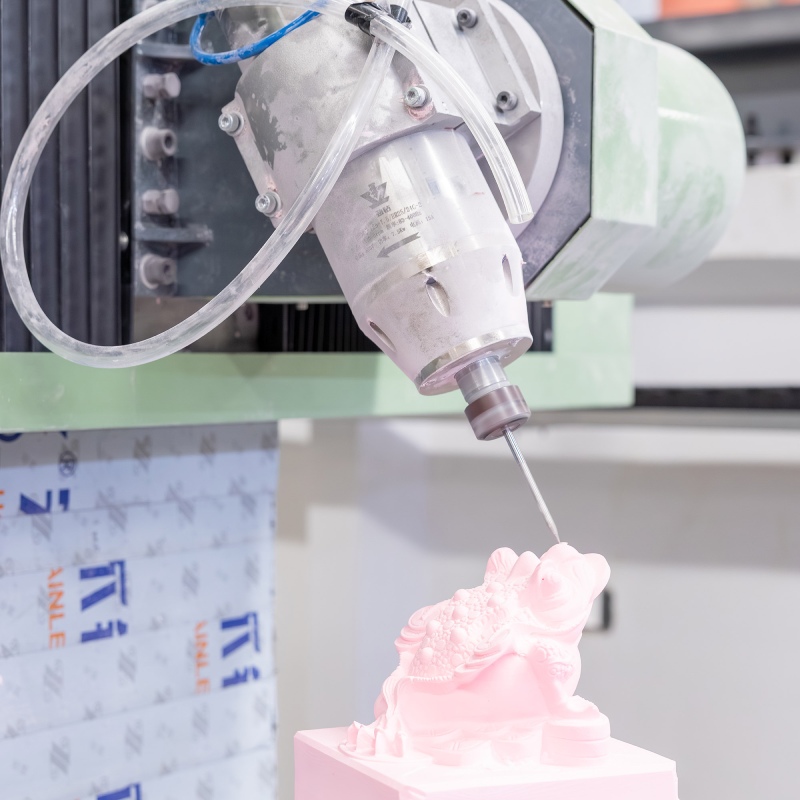
    Is a Stone CNC Carving Machine Dangerous? One of the first questions many new buyers ask is:   "Is the machine safe? Could it seriously injure someone?" The honest answer is simple:   A stone CNC carving machine is an industrial cutting machine. It is not a toy. Like any equipment with a high-speed spindle and cutting tools, it has potential risks.   However, modern CNC stone carving machines are designed with multiple safety systems. Under normal operation and with proper training, accidents are extremely rare.   In fact, in most cases, the machine itself isn't the problem—unsafe operating habits are.   This article explains where the real risks come from and how to avoid them.   Every CNC Machine Has Risks—But They're Manageable The spindle of a stone CNC machine typically rotates at 0–24,000 RPM, depending on the material and machining process. At these speeds, the cutting tool can easily process: Granite Marble Quartz Artificial stone Ceramic Bluestone If the machine can cut stone, it can certainly injure a hand that enters the cutting area. That's why professional manufacturers build multiple layers of protection into the machine.   Built-In Safety Features That Protect Operators Most modern stone CNC carving machines include several important safety mechanisms. Safety Feature Purpose Emergency Stop Button Immediately stops machine operation during emergencies Limit Switches Prevent the machine from moving beyond its travel range Protective Covers Reduce dust exposure and prevent accidental contact with moving parts Electrical Protection Helps prevent overloads and electrical faults Stable Machine Frame Minimizes vibration and improves operational stability   The Three Most Common Causes of CNC Accidents Interestingly, machine failures are not the leading cause of injuries.   Most accidents happen because operators ignore basic safety procedures.   1. Wearing Gloves During Machine Operation Many people believe gloves always improve safety. During CNC machining, the opposite can be true. Loose gloves can become caught by rotating tools or spindles and pull a hand toward the cutting area within seconds. Best practice: Never wear loose gloves while the spindle is running.   2. Cleaning Dust Before the Machine Stops Stone machining creates a large amount of dust and chips. Some operators instinctively reach inside to brush away debris while the machine is still moving. Even if the spindle appears slow, it may still be rotating at dangerous speed. Always wait until: The spindle has completely stopped All axes stop moving The controller indicates machining has finished Only then should cleaning begin.   3. Changing Tools Too Early After pressing the Stop button, the spindle may continue rotating because of inertia. Removing a tool before it completely stops can cause: Cuts Flying tools Tool holder damage Always verify that the spindle has fully stopped before changing tools.   Daily Safety Habits That Make a Big Difference Good operators develop habits that prevent accidents long before they happen. Before Starting Check tool tightness. Inspect cooling water flow. Confirm emergency stop button functions properly. Verify workpiece is securely clamped. Remove unnecessary objects from the machine table. During Machining Stay outside the machining area. Never reach into the machine while it is operating. Keep children and unauthorized personnel away. Watch for abnormal vibration or unusual sounds. After Machining Wait for complete spindle stop. Clean chips and dust. Inspect tool wear. Turn off power if the machine will not be used for an extended period.   Why Operator Training Is More Important Than Experience Many people assume experienced workers never make mistakes.   In reality, experienced operators sometimes become overly confident and skip safety steps.   On the other hand, beginners who carefully follow operating procedures often have excellent safety records.   The safest operators are those who consistently follow standard procedures—regardless of how many years they've been working.   Simple Workshop Rules Worth Posting Near Every Machine Printing a small reminder near the CNC machine can help reinforce safe habits. Do Don't Wear safety glasses Wear loose gloves during machining Wait until spindle stops Reach into the machine while it's running Press Emergency Stop if needed Remove guards or safety covers Keep work area clean Distract the operator during machining Follow maintenance schedule Ignore unusual sounds or vibration   Our Safety Support Before Delivery Before every machine leaves our factory, we help customers understand safe operation by providing: Complete machine operation training Safety precautions before startup Tool changing instructions Daily maintenance guidance Operation manuals Remote technical support whenever needed Our goal is not only to deliver a high-performance router machine but also to help every operator use it safely and confidently from day one.   Final Thoughts A safety stone CNC carving machine is a powerful industrial tool. It deserves respect—but it should not be feared.   Modern machines include multiple safety protections, and the overwhelming majority of workplace incidents are caused by unsafe habits rather than equipment defects.   Remember three simple rules: Never wear loose gloves while operating. Never reach into the machine before all movement has stopped. Never change tools until the spindle is completely stationary. Develop these habits from the beginning, and your CNC machine will remain a productive, reliable partner for many years.
    Read More
  • How to Extend the Lifespan of Stone CNC Machines
    How to Extend the Lifespan of Stone CNC Machines
    Mar 04, 2026
    A Practical Guide Based on Real Production Scenarios   Stone CNC machines are designed for high-load, high-dust, and long-hour operations. However, in real factory environments, the actual lifespan of machines can vary dramatically — from 5 years to over 12 years — depending on maintenance practices, working conditions, and machine configuration.   In this guide, we share practical, field-tested methods to extend the lifespan of stone CNC machines, based on real customer cases and export experience.   Control Dust and Heat — The Two Biggest Enemies of CNC Machines Real Production Scenario In a granite processing workshop in India, one of our customers operates a 3-axis stone CNC router continuously for 10–12 hours per day. During peak season, the machine runs for 72 hours with only short breaks.   Without proper dust removal and cooling systems, spindle temperature can exceed 65°C, leading to: Bearing wear Reduced spindle accuracy Premature motor failure After installing: Industrial-grade dust collectors Water-cooled spindle systems Sealed guide rails   The machine maintained ±0.01mm positioning accuracy even under high-temperature, high-humidity conditions. pic1 spindle Practical Recommendations Use oil-immersed guide rails to prevent dust intrusion. Clean linear rails and rack systems daily. Maintain workshop temperature between 5°C–35°C. Install voltage stabilizers in regions with unstable power supply.   2. Choose the Right Machine Configuration From the Beginning Many lifespan problems originate from incorrect machine selection. Comparison: Standard Guide Rail vs Oil-Immersed Guide Rail Feature Standard Guide Rail Oil-Immersed Guide Rail Dust Protection Low Excellent Lubrication Stability Manual Continuous Service Life 3–5 years 6–10 years Maintenance Frequency High Low   For marble engraving workshops working 8+ hours daily, oil-immersed systems significantly reduce maintenance costs over 5 years.   Conclusion: Paying 5–8% more for upgraded rail systems can extend machine lifespan by 30–50%. pic2 guide rail 3. Prevent Overloading — Especially in Granite Cutting Granite has high hardness and high density. Improper parameter settings cause: Excessive spindle load (>85% rated capacity) Tool overheating Servo motor stress Example: When cutting 20mm thick granite: Incorrect feed speed: 8000mm/min → causes vibration and tool breakage. Optimized feed speed: 4500–5500mm/min → stable torque output, smoother finish.   Monitoring spindle current and servo load percentage is critical.   4. Regular Maintenance Schedule (Recommended for Stone Factories) Frequency Maintenance Item Daily Clean dust, check lubrication Weekly Inspect rack & pinion alignment Monthly Check servo calibration Every 6 Months Replace worn cutting tools Annually Check spindle bearings & electrical cabinet ventilation   Machines that follow this schedule typically maintain over 90% mechanical precision after 5 years.   5. Electrical System Stability Is Often Ignored In export markets such as Egypt or Southeast Asia, voltage fluctuations are common. Common issues: Servo driver failure PLC malfunction Emergency shutdown errors Solutions: Install voltage stabilizer (±5% range) Use high-quality servo brands Ensure proper grounding (<4Ω recommended) pic3 control system 6. FAQ Section Q1: Why does my CNC spindle make abnormal noise after one year? Possible reasons: Bearing wear due to dust contamination Insufficient cooling water flow Long-term overload operation Solution: Check spindle temperature (normal range: 30–50°C during operation).   Q2: How long should a stone CNC machine last? With proper maintenance: Entry-level machine: 5–7 years Industrial heavy-duty machine: 8–12 years High-end 5-axis machining center: 10+ years   Q3: What parts wear out fastest? Cutting tools (3–6 months depending on material) Spindle bearings (2–4 years) Dust-proof seals Lubrication pumps   Q4: Is it better to upgrade old machines or buy new ones? If: Mechanical frame is stable Servo system is functional Precision deviation <0.05mm Upgrading control system may extend life 2–3 more years.   If: Frame deformation occurs Precision loss >0.1mm Frequent motor overheating Replacement is more economical long term.   7. Supplier Selection Also Affects Machine Lifespan   Comparison: Reliable Manufacturer vs Low-Cost Supplier Criteria Reliable Manufacturer Low-Cost Supplier Frame Welding Stress-relieved No heat treatment Electrical Cabinet Dust-proof sealed Basic installation After-sales Remote support & parts Limited response Spare Parts Availability 5–10 years Uncertain   Machines built with stress-relieved frames can prevent deformation after long-term heavy granite cutting.   8. Final Insight: Lifespan = Configuration + Usage + Maintenance A stone CNC machine is not a disposable device. It is a long-term production asset. Factories that: Monitor spindle temperature Maintain clean working environment Choose correct cutting parameters Work with experienced manufacturers   Can extend machine lifespan by 40% or more compared to average industry cases.   About the Author As an export-oriented CNC machinery supplier with experience serving customers in Southeast Asia, the Middle East, and South America, we have observed over 300+ stone processing workshops. The data and recommendations in this article are based on real operational feedback and long-term after-sales tracking.     If you are considering purchasing or upgrading a stone CNC machine, understanding lifecycle cost is more important than focusing only on initial price.
    Read More

leave a message

leave a message
If you are interested in our products and want to know more details,please leave a message here,we will reply you as soon as we can.
submit

Home

Products

WhatsApp

contact