Can a CNC Stone Carving Machine Replicate Hand-Carved Intricate Details
Jan 26, 2026
Can a CNC Stone Carving Machine Replicate Hand-Carved Intricate Details?
For centuries, intricate stone carvings—ornamental columns, relief murals, statues, and architectural decorations—have been created by skilled artisans using chisels and hammers. Today, with the rapid development of CNC stone carving machines, many buyers ask an important and very specific question:
Can a CNC stone carving machine truly replicate the fine, delicate details of hand-carved stone?
The short answer is: Yes—and in many industrial and architectural applications, CNC machines can not only replicate but also surpass hand carving in consistency, precision, and efficiency. The long answer depends on technology, configuration, and how the machine is applied.
This article explores the issue from a technical, practical, and buyer-focused perspective.
1. What “Intricate Details” Really Mean in Stone Carving
When customers talk about “hand-carved details,” they usually refer to:
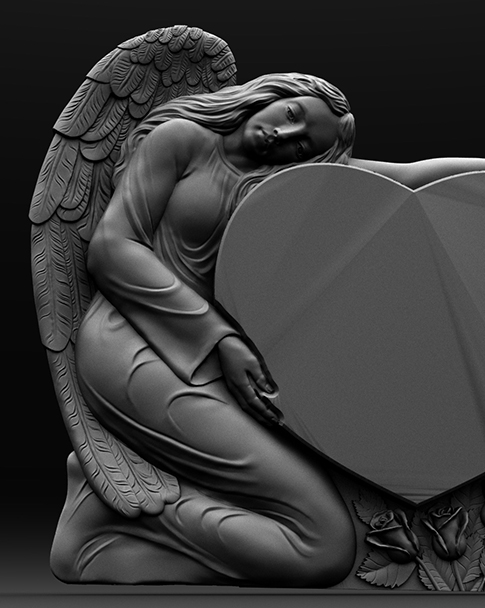
Hair, facial expressions, and skin texture on statues
Deep relief layers on decorative panels
Sharp edges and smooth curves on Roman columns
Hollowed-out patterns and undercuts on marble screens
Fine lettering and micro-textures on memorial stones
These features require:
High positional accuracy
Stable multi-axis motion
Consistent cutting depth
Smooth surface finishing
Modern stone CNC routers are specifically engineered to meet these requirements.
2. How CNC Stone Carving Machines Achieve Hand-Level Detail
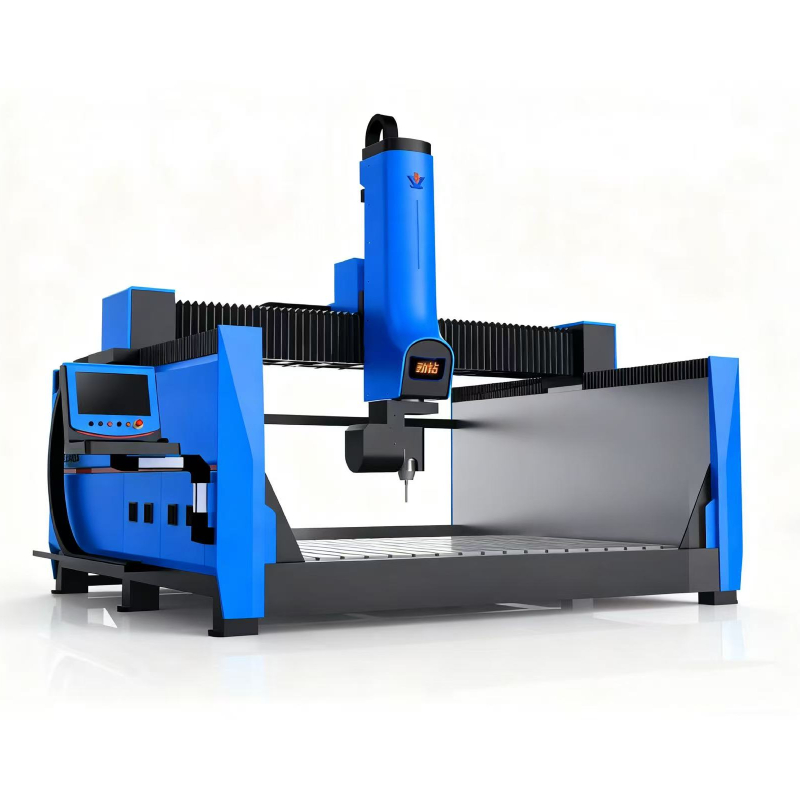
A professional CNC stone carving machine replicates intricate details through a combination of mechanical structure, control system, and tooling.
(1) High-Precision Motion Control
Industrial CNC stone carving machines typically use:
Servo motors with closed-loop feedback
Linear guideways with low friction coefficients
Ball screws or rack systems with positioning accuracy up to ±0.01 mm
In real production:
During continuous 48–72 hour statue carving in granite workshops, well-configured CNC machines maintain consistent tool paths without drift, even under heavy spindle load.
This level of repeatability is extremely difficult to achieve with purely manual carving.
(2) Multi-Axis Machining for True 3D Details
Unlike simple engraving routers, professional stone CNC machines operate with:
3-axis for flat reliefs and patterns
4-axis for cylindrical columns and curved surfaces
5-axis for full statues, deep relief, and undercut structures
Example application:
A 5-axis CNC stone carving machine can sculpt a full marble sculpture—nose bridges, eye sockets, folded garments, and back-side contours—in a single setup, something that would require multiple repositionings and weeks of manual labor.
Multi-axis linkage is the key technology that allows CNC machines to approach true hand-carving complexity.
(3) Advanced Tooling and Layered Carving Strategy
To reproduce hand-carved texture, CNC processing is usually divided into:
Rough carving (large tools, high efficiency)
Semi-finishing (medium tools, shape accuracy)
Fine carving (small tools, detail expression)
Polishing or brushing (surface aesthetics)
For example:
6–10 mm tools shape the stone body
2–3 mm tools define facial features
0.8–1.5 mm tools carve hair lines, veins, and ornament edges
This layered approach enables CNC machines to reproduce micro-level detail that visually approaches hand carving.
3. CNC Carving vs Hand Carving: A Professional Comparison
Aspect
CNC Stone Carving Machine
Traditional Hand Carving
Precision
±0.01 mm repeatability
Depends on craftsman skill
Consistency
100% identical copies
Each piece slightly different
Efficiency
5–10× faster for complex works
Very time-consuming
Labor cost
1 operator for multiple machines
Highly skilled artisans required
Complex 3D shapes
4/5-axis continuous cutting
Extremely labor intensive
Design modification
Digital model editing
Must restart carving process
Mass production
Excellent
Almost impossible
Key insight for buyers:
Hand carving excels in artistic individuality.
CNC carving excels in engineering-level detail reproduction, structural symmetry, and scalable production.
4. Real Industrial Scenarios Where CNC Detail Replication Is Proven
(1)Architectural Decoration Projects
CNC machines are widely used to carve:
European-style columns
Church relief walls
Mosque stone screens
Hotel lobby sculptures
In large construction projects, CNC machines ensure hundreds of decorative components maintain identical depth, curvature, and proportion, something manual carving cannot guarantee.
(2) Monument & Sculpture Production
In sculpture workshops, CNC machines carve:
Life-size human statues
Animal sculptures
Abstract art installations
After CNC finishing, artists often apply light manual polishing only, reducing labor time by over 60–80%.
(3)Customized Stone Artwork for Export
For export orders to the US, Middle East, and Europe, CNC carving allows factories to:
Match customer 3D files exactly
Reproduce damaged parts years later
Maintain stable quality across multiple shipments
This repeatability is a major reason CNC carving machines are now standard in export-oriented stone factories.
5. Common Buyer Questions
Q1: Can CNC machines carve details as fine as hand carving?
Yes. With proper tool selection and 4/5-axis control, CNC stone carving machines can reproduce hair texture, facial expressions, layered reliefs, and micro-ornament patterns. In many factory tests, CNC carving achieves smoother symmetry and higher dimensional consistency than manual work.
Q2: Will CNC carving look “too mechanical”?
Not if finishing parameters are properly set. Modern machines support variable step-over carving, adaptive tool paths, and random-texture simulation. After light surface treatment, CNC-carved stone often becomes visually indistinguishable from hand-carved products.
Q3: What stones can CNC machines carve in fine detail?
Professional stone CNC machines are widely used on:
Marble
Granite
Limestone
Sandstone
Artificial stone
With appropriate spindle power and tooling, even high-hardness granite can be carved with fine structural details.
Q4: Is CNC carving suitable for one-piece custom artwork?
Yes. CNC machines are especially suitable for custom projects because 3D models can be easily modified, previewed, and optimized before carving, significantly reducing trial-and-error costs.
Q5: Does CNC carving completely replace hand carving?
No. CNC carving handles structure, depth, proportion, and repeatability, while hand carving still plays a valuable role in artistic refinement, surface emotion, and final aesthetic tuning.
In modern workshops, CNC machines and craftsmen work together.
6. Final Verdict: Can CNC Machines Replicate Hand-Carved Details?
From an industrial and engineering standpoint, modern CNC stone carving machines absolutely can replicate—and in many scenarios exceed—traditional hand-carved detail accuracy.
They offer:
Measurable precision
Repeatable quality
Scalable production
Stable delivery for international projects
For stone factories, architectural contractors, and sculpture workshops, CNC carving machines are no longer an alternative—they are now the core foundation of professional stone carving production.
Examples of engraved designs
Read More









 IPv6 network supported