
What Are You Looking For?
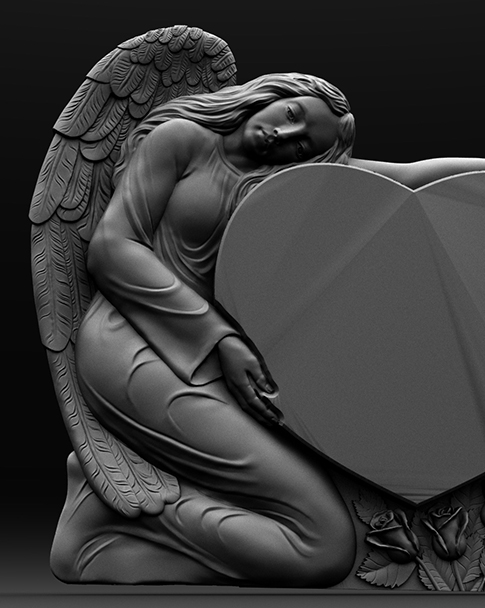

Stone processing requirements are rarely identical from one workshop to another. Some customers focus on flat reliefs and lettering, while others need to carve columns, ornaments, sculptures, or other three-dimensional stone pieces.
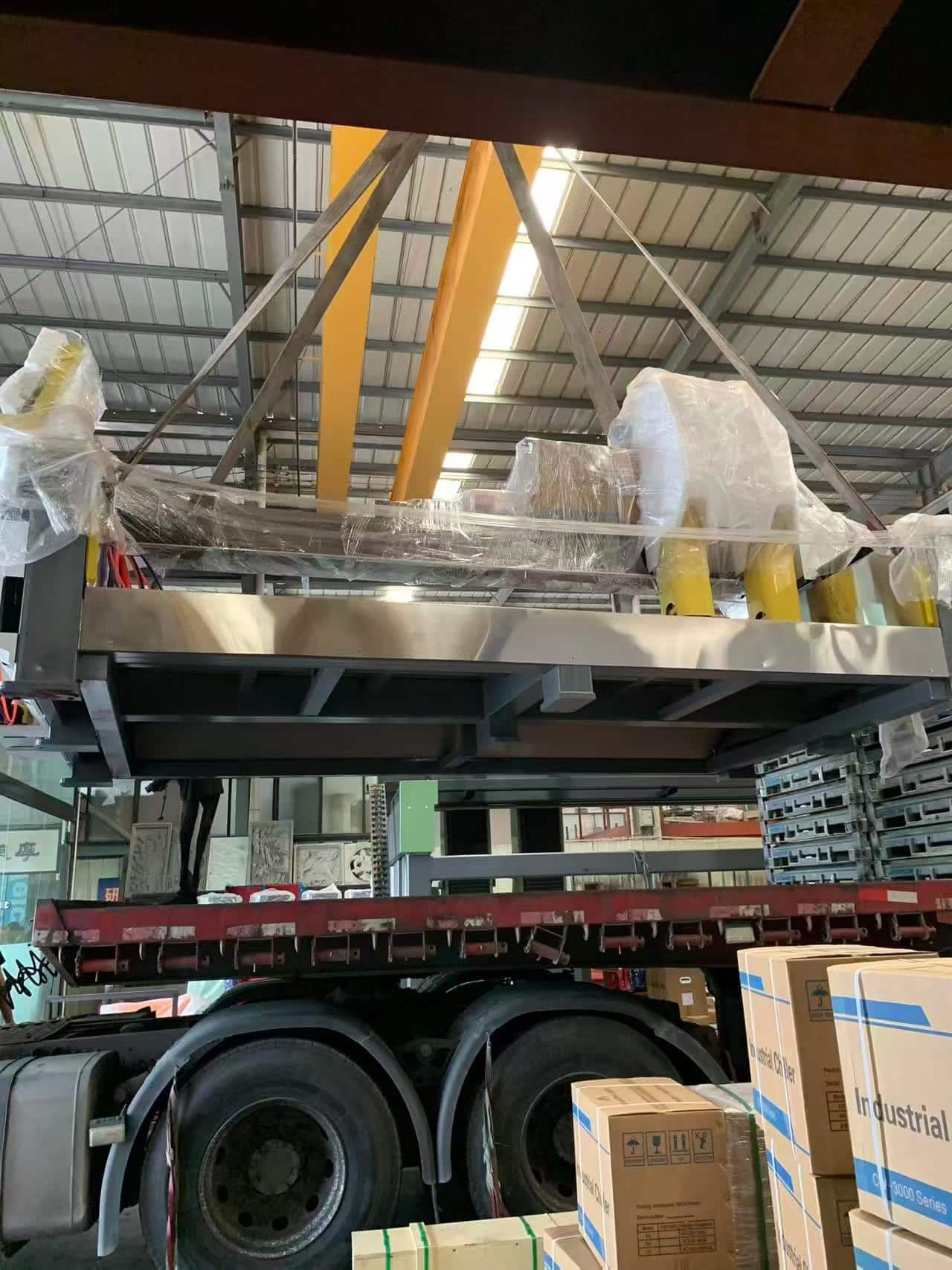
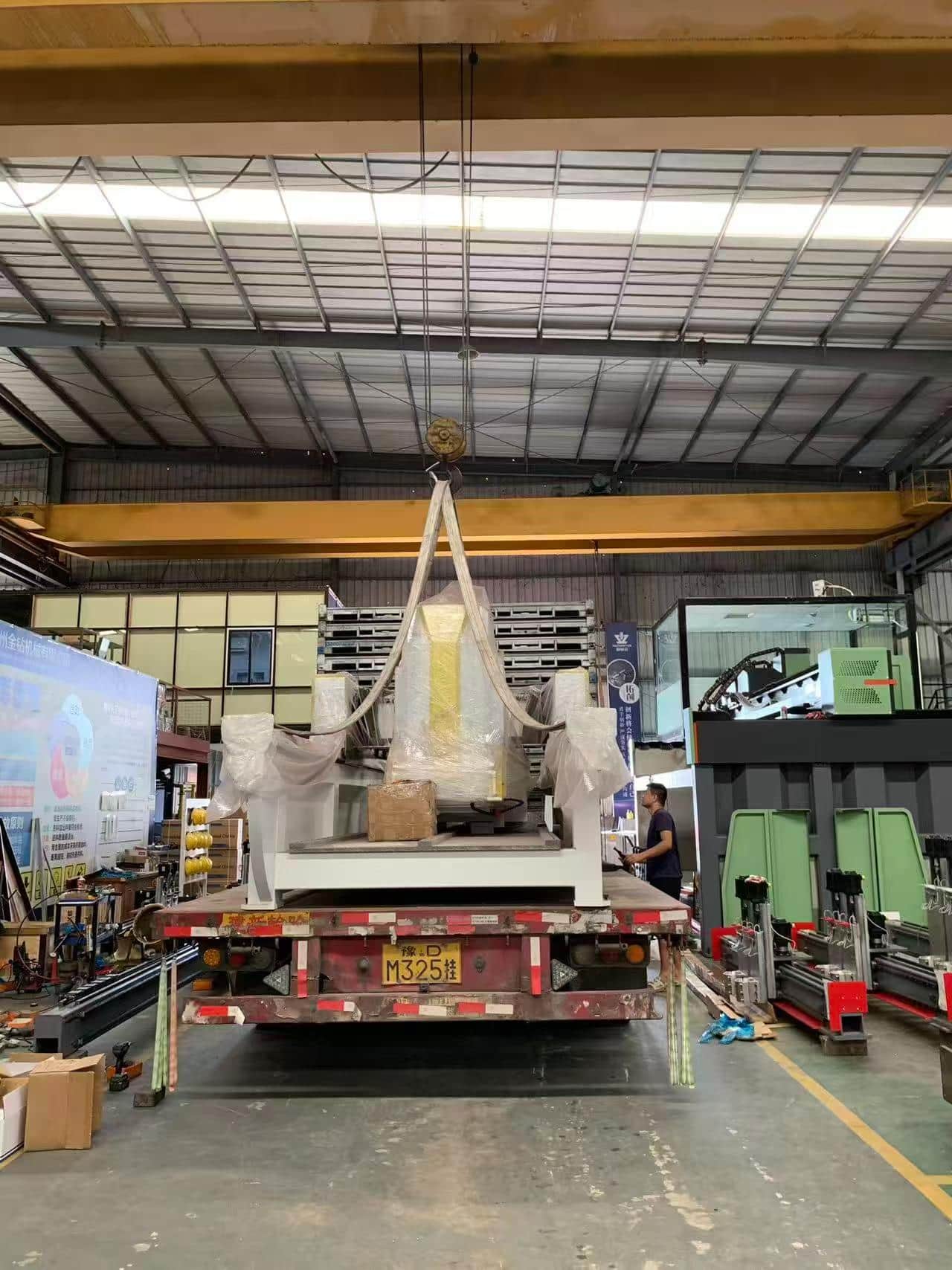
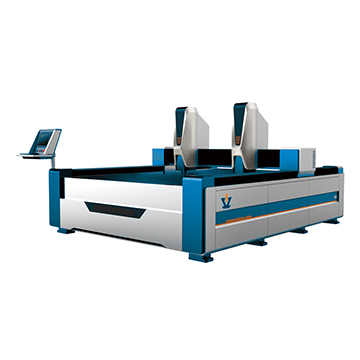
In August and September 2026, Quanzhou Jinzuan Technology Co., Ltd. shipped three stone processing machines to two customers in Russia, including a 3515T-2D three-axis stone carving machine with an additional rotary axis, a 720 integrated profiling and cutting machine, and a 3015T-2D three-axis stone carving machine.
Rather than supplying the same machine configuration to every customer, these orders were configured around different production requirements.
| Machine | Configuration | Typical Applications |
|---|---|---|
| 3515T-2D | 3-axis stone carving machine + rotary axis | Flat carving, reliefs, lettering, cylindrical carving and 3D stone ornaments |
| 720 Integrated Profiling & Cutting Machine | Integrated profiling and cutting structure | Stone profiling, contour cutting, shaped stone components and customized edges |
| 3015T-2D | 3-axis stone carving machine | Stone reliefs, lettering, patterns, decorative panels and general carving work |
The 3515T-2D: From Flat Stone to Cylindrical Carving
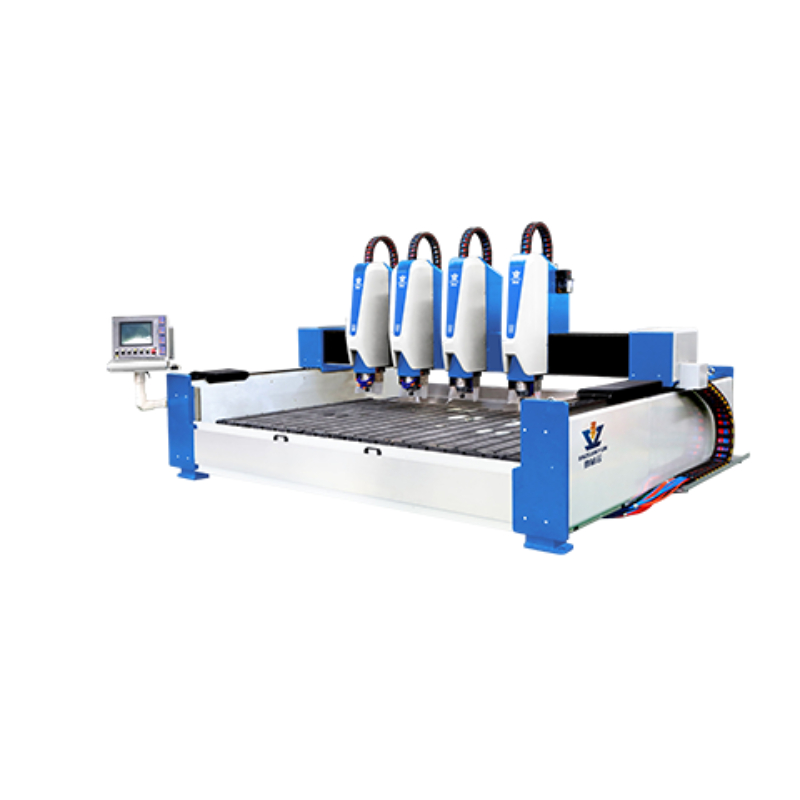
One of the most interesting configurations in this shipment is the 3515T-2D three-axis stone carving machine equipped with a rotary axis.
A standard three-axis carving machine mainly works on a flat X-Y-Z coordinate system. With the additional rotary axis, the machine can also hold cylindrical or column-shaped stone workpieces and rotate them during machining. This means the same machine can be used for different types of projects.
Flat machining: Stone slabs can be positioned on the working table for lettering, relief patterns, decorative motifs and other 2D/3D carving tasks.
Rotary machining: When a cylindrical stone workpiece is mounted on the rotary axis, the workpiece can rotate while the carving tool moves along the programmed path. This configuration is suitable for applications such as stone columns, cylindrical ornaments, pillars and other round decorative components.
For workshops handling both architectural stone decoration and custom carving orders, this configuration can reduce the need to dedicate separate machines to flat and cylindrical work.
A rotary axis is not necessary for every stone workshop. The key question is what kind of workpieces the customer needs to process.
| Without Rotary Axis | With Rotary Axis |
|---|---|
| Mainly flat stone workpieces | Flat + cylindrical workpieces |
| Relief carving on slabs | Relief carving + rotary carving |
| Stone lettering and patterns | Lettering, patterns, columns and ornaments |
| Suitable for mainly 2D/3D flat projects | Better suited to mixed production requirements |
The important point is not simply adding another axis, but matching the machine structure to the customer's actual workpieces.
The 720 Integrated Profiling & Cutting Machine: A Different Kind of Stone Workflow
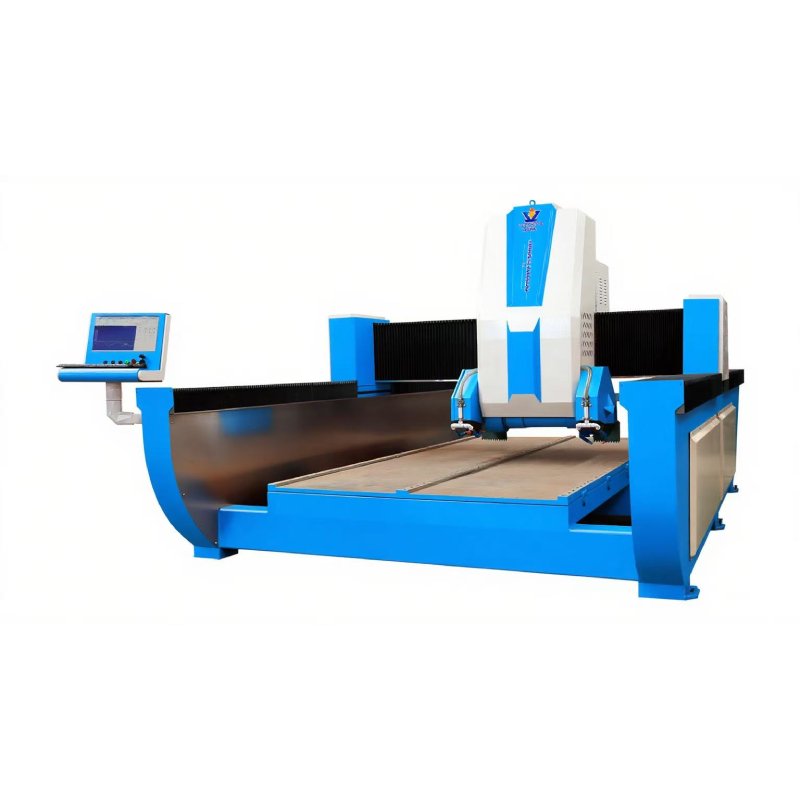
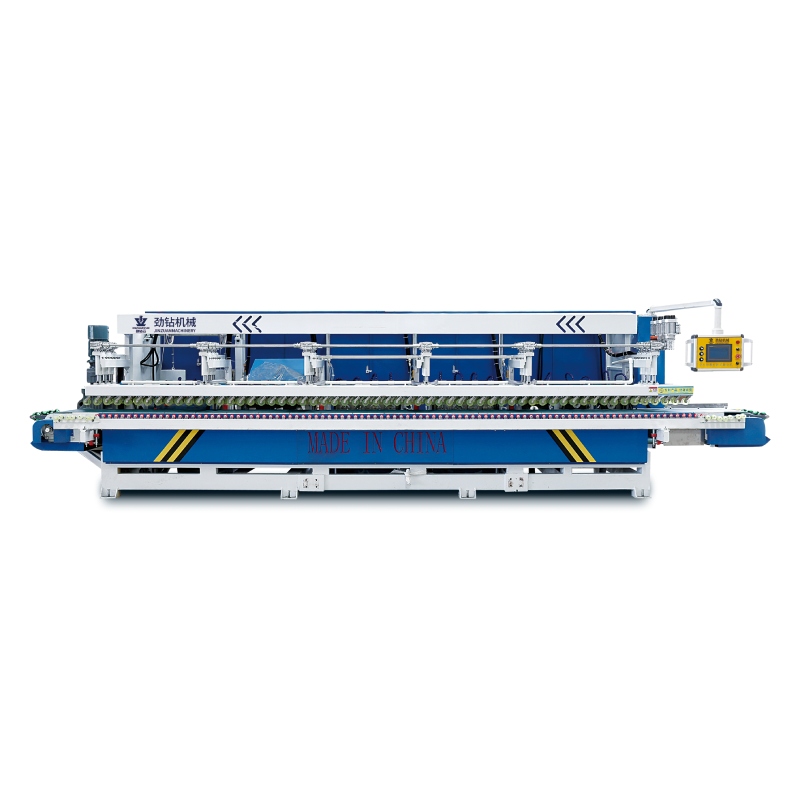
The second machine shipped to the Russian customer was a 720 integrated profiling and cutting machine.
While a CNC carving machine focuses on carving and detailed surface processing, profiling and cutting equipment addresses another part of stone production: creating the required contour, shape and edge profile.
For stone workshops producing customized architectural components, this type of machine can be used alongside CNC carving equipment to create more complete processing workflows.
For example, a workshop may first cut a stone blank to the required size and contour, then use profiling or carving equipment to process decorative edges or surface details.
This is why machine selection should start with the question: What does the finished stone product look like, and which processing steps are required to make it? Rather than simply asking which machine has more functions.
The 3015T-2D: A Practical CNC Solution for General Stone Carving
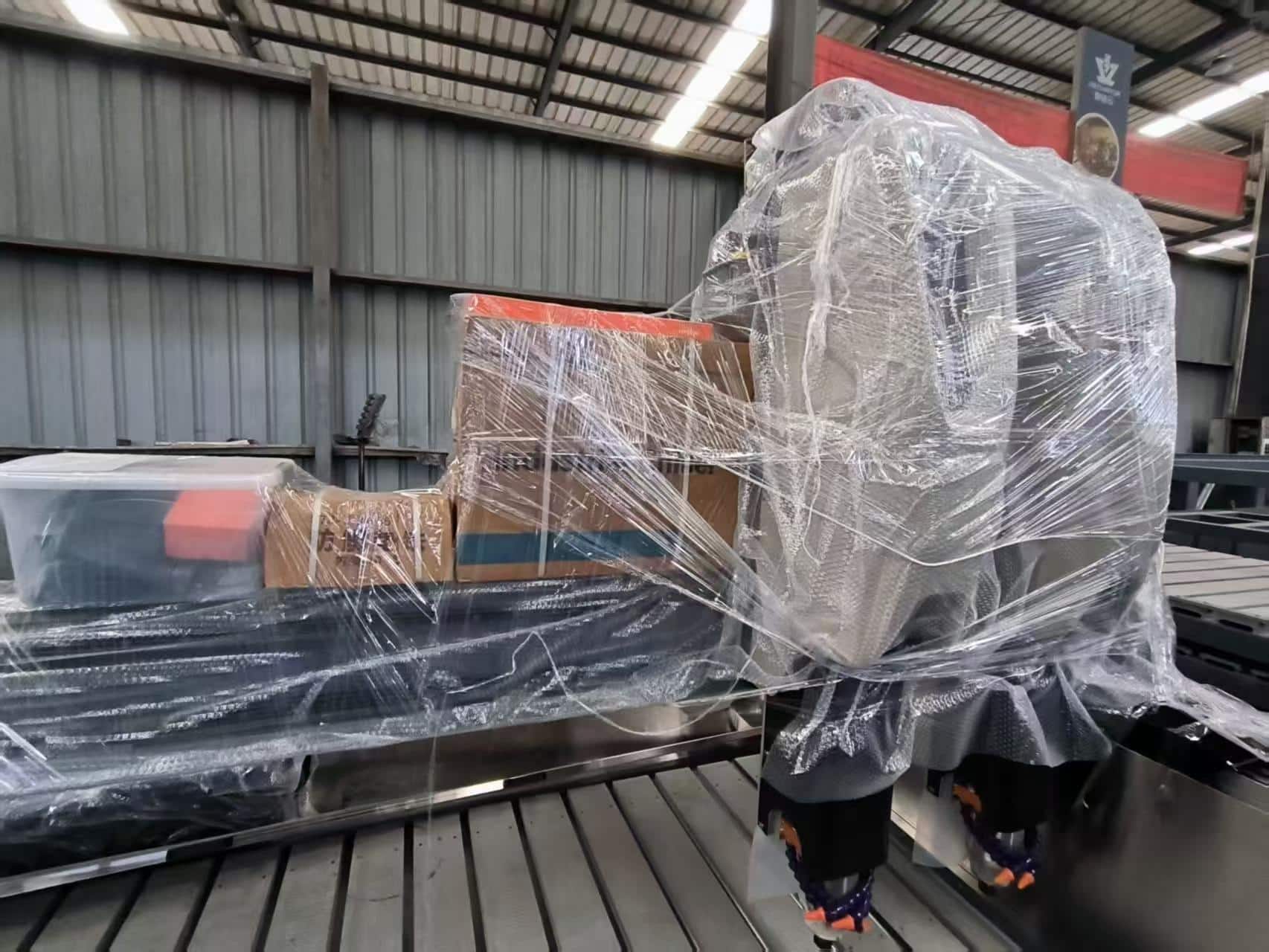
Another Russian customer selected the 3015T-2D three-axis stone carving machine.
The 3015 working size provides a practical platform for a wide range of common stone carving jobs, including:
For workshops whose production is primarily based on flat stone slabs and panels, a conventional three-axis configuration can be a straightforward solution without introducing additional rotary functions that may not be needed.
How Should You Choose Between a Standard 3-Axis CNC and a Rotary-Axis Configuration?
This is one of the questions customers often ask before ordering a stone carving machine.
Choose a standard 3-axis configuration when: Your main products are flat slabs, relief panels, stone signs, inscriptions and other flat-surface carving projects.
Consider adding a rotary axis when: You regularly process cylindrical or round stone workpieces such as columns, pillars, cylindrical ornaments or similar components.
Consider combining carving with profiling/cutting equipment when: Your production involves multiple stages, such as cutting a stone blank, creating a specific contour, profiling its edges and then adding decorative carving.
The right configuration depends more on the geometry of the finished product than on the number of machine axes alone.
From Russia Orders to Real Production Scenarios
The three machines shipped to Russia in August and September represent three different approaches to stone processing:
For Quanzhou Jinzuan Technology Co., Ltd., these orders are not simply three machines leaving the factory. They reflect a more practical approach to CNC stone machinery: start from the customer's material, workpiece shape and production process, then build the machine configuration around those requirements.
If your workshop is processing stone slabs, tombstones, architectural components, columns or custom stone ornaments, the key is to select a machine that fits the actual production workflow—not simply the machine with the longest specification list.
leave a message
Scan to Wechat :

Scan to WhatsApp :






 IPv6 network supported